


Table of Contents
Table of Contents
Your campaign just funded. Confetti, screenshots, a few happy messages from friends. Then, maybe a day later, it hits you. You now owe a box to every single backer. Hundreds of them. Maybe thousands.
Honestly, this is the part most creators underestimate. Shipping rewards is a bit like handing out wedding candy to a whole village on the same afternoon. Everyone expects theirs, everyone wants it on time, and somebody always moved house last week.
That's where a crowdfunding fulfillment company comes in. The right one stores your rewards, packs each pledge tier correctly, and gets parcels to backers in different countries without you living in your garage for a month. The wrong one, well, you'll read about it in your comments section.
So below, we put 15 crowdfunding fulfillment providers side by side. Some are US specialists. Some are in the UK. Some ship straight from Asia, close to where a lot of rewards are actually made. We're not ranking them from best to worst, because "best" really depends on your product and where your backers live. Instead, you'll see who each one fits, and what to ask before you sign.
What Crowdfunding Fulfillment Actually Involves
Crowdfunding fulfillment is the whole job of getting backer rewards from the factory to each backer's door. It sounds simple. It isn't, quite.
From factory to backer: the steps
- Freight from the factory. Your finished goods move from the manufacturer to one or more warehouses.
- Receiving and quality checks. The warehouse counts the cartons, checks for damage, and labels the stock.
- Importing backer data. Addresses and pledge details come in from your pledge manager or a spreadsheet.
- Kitting by tier. Each tier gets its own pack. Add-ons, stretch goals and extras go in the right boxes.
- Shipping and tracking. Parcels go out, and tracking numbers flow back to you or to backers.
- After-sales. Lost parcels, wrong addresses, damaged items, returns. There's always a few.
How it differs from regular ecommerce fulfillment
A normal online store sends orders out in a steady trickle. A crowdfunding campaign is one giant wave. Thousands of orders land on the same week, and then things go quiet. That spike changes everything. Staffing, packing space, carrier pickups, even how storage is billed.
There's also more mixing and matching. One backer has the base game. Another has the deluxe tier, two expansions and a playmat. A good crowdfunding 3PL is used to that kind of chaos. A general warehouse may not be.
Before You Compare: 5 Questions That Narrow the List
Fifteen names is a lot. These five questions will cut it down fast.
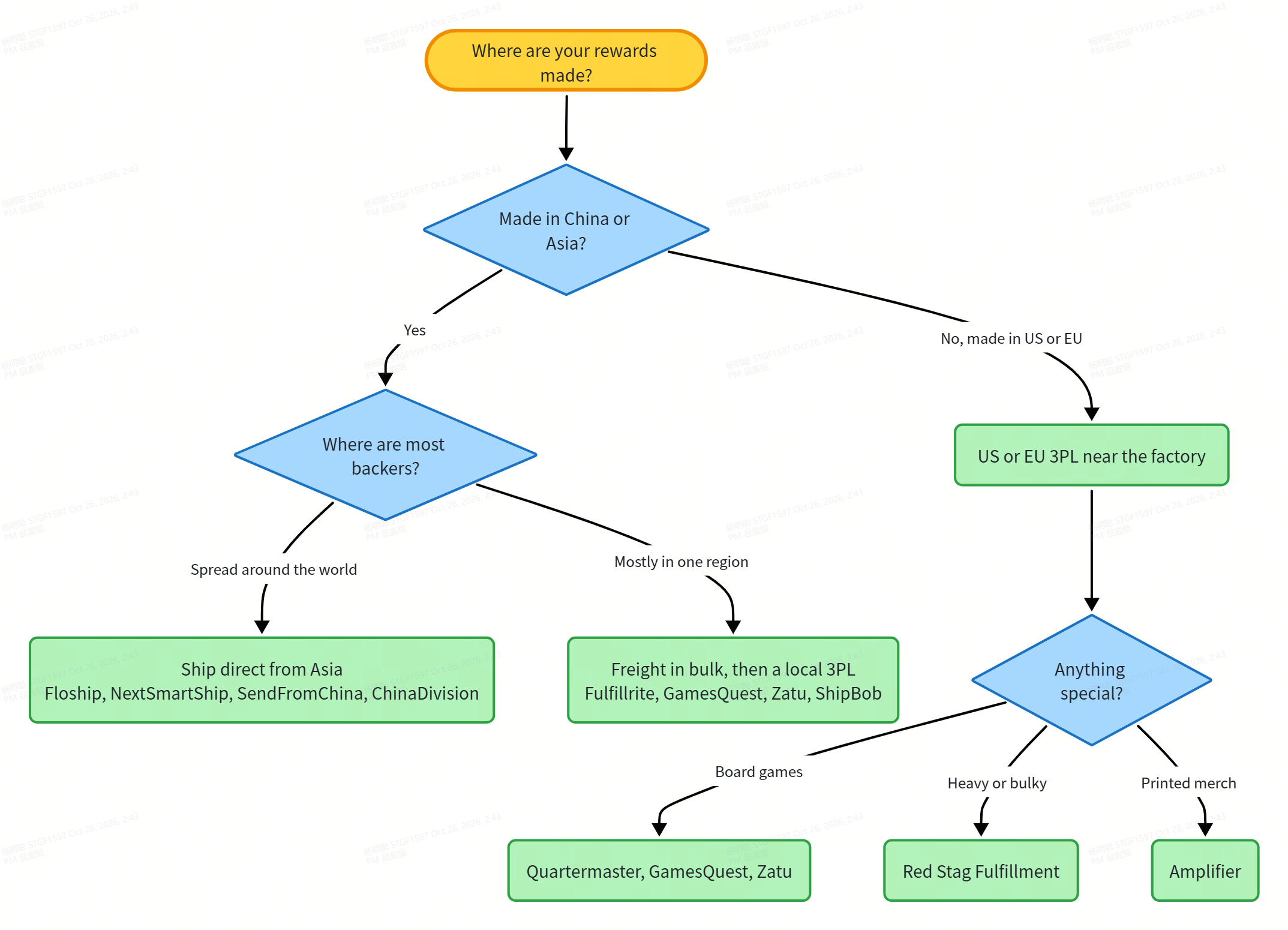
1. Where are your rewards made?
If your factory is in China or elsewhere in Asia, you can ship rewards directly from there, or you can freight everything in bulk to the US or Europe first. If you make things in the US, a US warehouse near your factory usually makes more sense.
2. Where do most backers live?
Pull your backer report and look at the country split. Mostly American backers? A US warehouse is worth a look. Backers spread across 40 countries? Shipping from one central hub might be simpler.
3. How many SKUs, tiers and add-ons?
A single-SKU campaign is easy. A board game with five tiers and a pile of add-ons is not. Ask each provider how they handle kitting and how they check that every box matches the pledge.
4. Does it work with your pledge manager?
Most creators use a pledge manager like BackerKit, PledgeBox, Gamefound or Kickstarter's own pledge tool. Ask whether the provider imports directly from it or wants a CSV file. Both can work. You just want to know before launch day.
5. Minimums and setup fees
Some 3PLs want monthly minimums. That's fine for a store, but painful for a one-off campaign. Ask what you pay if you only ship once.
Here's a simple way to see where you land:
15 Crowdfunding Fulfillment Providers at a Glance
Here's the short version. Details for each one are further down.
|
#
|
Provider
|
Base
|
Good fit for
|
Ask about
|
|---|---|---|---|---|
|
1
|
Fulfillrite
|
USA
|
Light, low-SKU rewards for US backers
|
International shipping costs from the US
|
|
2
|
GamesQuest
|
UK
|
Tabletop games with UK and EU backers
|
Recent backer feedback, tracking options
|
|
3
|
Quartermaster Logistics
|
USA
|
Board game and tabletop campaigns
|
Storage terms if delivery slips
|
|
4
|
Floship
|
Hong Kong
|
Asia-made products shipped worldwide
|
Minimum campaign size
|
|
5
|
Red Stag Fulfillment
|
USA
|
Heavy, bulky or high-value rewards
|
Fit for small, light items
|
|
6
|
ShipBob
|
USA, multi-site
|
Campaigns turning into an online store
|
How they handle a one-time spike
|
|
7
|
NextSmartShip
|
China
|
China-made rewards for global backers
|
Duties handling per country
|
|
8
|
SendFromChina
|
China
|
Crowdfunding and board game rewards made in China
|
Quote by route, tier packing plan
|
|
9
|
ChinaDivision
|
China
|
Store and crowdfunding orders from China
|
References from past campaigns
|
|
10
|
ShipMonk
|
USA
|
Small, light items at scale
|
Product size and category limits
|
|
11
|
Easyship
|
Shipping platform
|
Creators who pack themselves
|
Which partner warehouse would pack
|
|
12
|
Amplifier
|
USA
|
Shirts, prints, mugs, stickers
|
Fit for non-merch products
|
|
13
|
eFulfillment Service
|
USA
|
Pre-orders and QC before shipping
|
Crowdfunding volume they've handled
|
|
14
|
InterFulfillment
|
USA
|
Custom packaging and kitting
|
Crowdfunding-specific experience
|
|
15
|
Zatu Fulfillment
|
UK
|
Board games for UK and EU backers
|
How EU orders actually move
|
The 15 Crowdfunding Fulfillment Companies, One by One
Quick note first. Everything below is based on what each company says publicly. We didn't test them all, and things change. Always get a written quote and talk to a creator who used them recently.
1. Fulfillrite
Fulfillrite is a US-based 3PL that focuses on crowdfunding and ecommerce orders. It runs a warehouse in New Jersey and comes up on almost every list of Kickstarter fulfillment companies. It also connects with BackerKit, which saves a lot of copy-pasting.
Good fit: Smaller, lighter rewards with a low SKU count, and mostly US backers. First-time creators like that it explains the process in plain terms.
Keep in mind: Everything ships out of the US. If a big chunk of your backers are in Europe or Australia, price out those international legs early.
2. GamesQuest
GamesQuest is a UK fulfilment company built around board, card and roleplaying games. It works with campaigns on Kickstarter, Gamefound and BackerKit, and runs a UK warehouse plus an EU hub. It also offers VAT agent services and help with GPSR, the EU's product safety rules. That stuff is boring until it isn't.
Good fit: Tabletop projects with lots of UK and EU backers.
Keep in mind: Public reviews are mixed. Read recent backer feedback and ask which shipping options include tracking.
3. Quartermaster Logistics
Quartermaster Logistics is based in central Florida and started as a sister company of the game retailer CoolStuffInc. It's well known in tabletop circles and offers factory-to-warehouse logistics too.
Good fit: Board game and miniatures campaigns shipping mostly to US backers.
Keep in mind: Ask exactly how storage is billed if your delivery date slips, and what happens to stock if there's a payment dispute. Good questions for any warehouse, really.
4. Floship
Floship is a Hong Kong-based fulfillment company with a network of warehouses. It has a long history with crowdfunding, especially for products made in Asia. It covers apparel, consumer electronics, personal care and higher-ticket items.
Good fit: Gadgets and consumer products made in Asia and shipped to backers worldwide.
Keep in mind: One source says it mainly takes projects above a certain backer count. Check whether your campaign size qualifies.
5. Red Stag Fulfillment
Red Stag runs fulfillment centers in Tennessee and Utah. It's known for big, heavy and bulky items, plus high-value goods where accuracy really matters. It says it integrates with Kickstarter and Indiegogo.
Good fit: Heavy rewards like furniture pieces, fitness gear or large kits, mostly going to US addresses.
Keep in mind: If your reward is a small, light item, this may not be the most natural fit.
6. ShipBob
ShipBob is a large ecommerce 3PL with warehouses in several locations. It's not a crowdfunding specialist. But if you plan to keep selling on Shopify after the campaign, it's worth a look, since your stock can stay in one place.
Good fit: Creators turning a campaign into an ongoing online brand with US customers.
Keep in mind: It's built for steady store orders. Ask how they handle one big wave of pledges, and how inbound freight from your factory works.
7. NextSmartShip
NextSmartShip is a China-based fulfillment company that supports Kickstarter and Indiegogo rewards. It stores goods near Chinese factories and ships parcels straight to backers.
Good fit: China-made rewards with backers spread across many countries.
Keep in mind: Like any cross-border option, ask how duties and VAT are handled for each country, and who pays them.
8. SendFromChina
SendFromChina is a China-based 3PL. It handles warehousing, order fulfillment and international shipping for online sellers, and it has a dedicated crowdfunding fulfillment service for Kickstarter and Indiegogo creators.
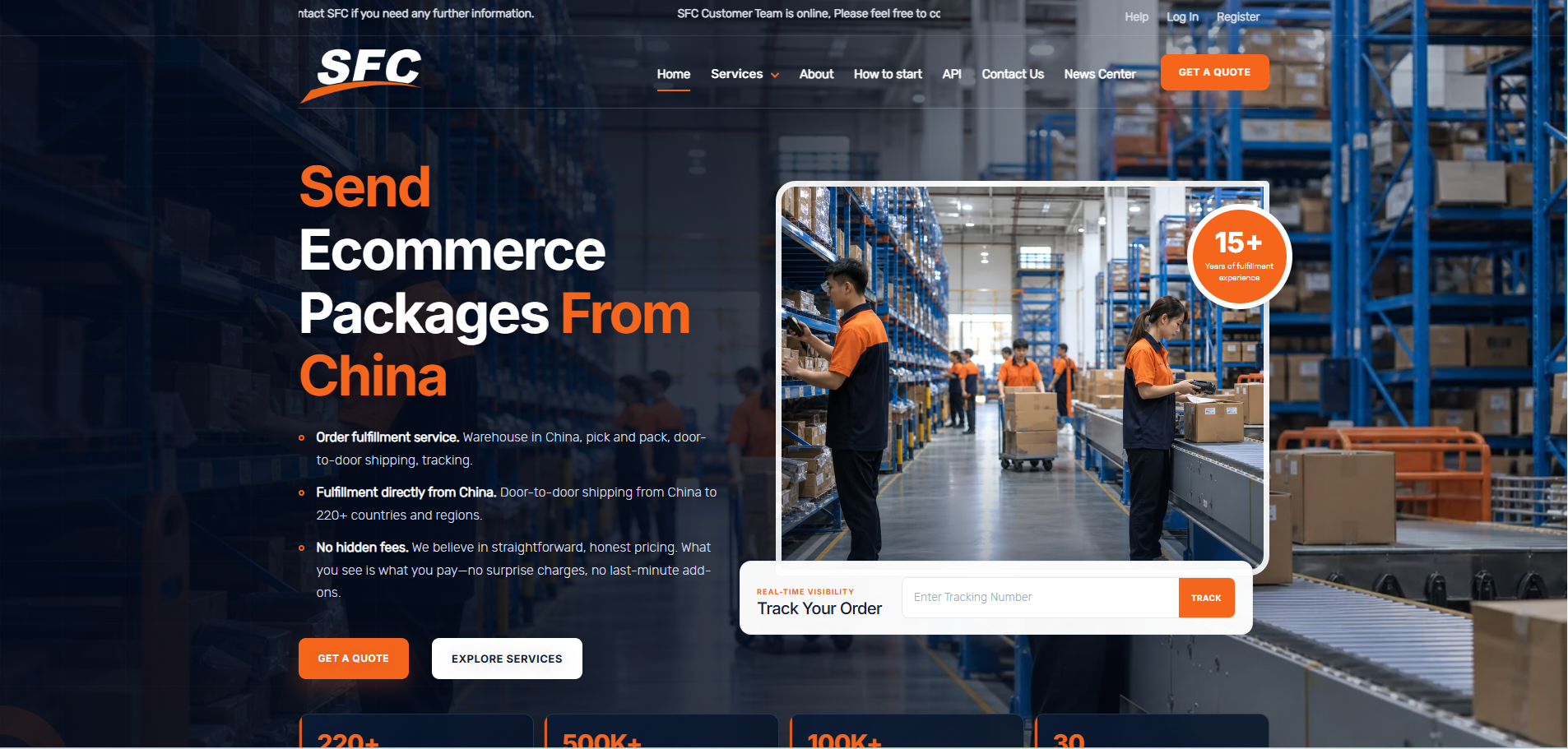
The workflow is pretty straightforward. Your factory sends finished rewards to the warehouse in China. The team receives them, runs a quality check, and stores them. Once your backer list is ready, they pick and pack by pledge tier, including add-ons, then ship to backers with tracking. Extra jobs like custom packaging, kitting, labeling and inserts are available. Not every packaging request is included by default, so it's worth listing yours early.
Board games are a big part of the work. Multiple SKUs, expansions, collector editions and add-ons all need planning around weight, packaging and destination rules. There's a separate page on board game fulfillment if that's you.
Pricing works on a quote basis. The cost is built from storage, shipping, VAT where it applies, pick and pack, plus optional packaging, barcodes and insurance. Eligible first-time customers can get 30 days of free storage.
Reference transit times, in business days, look roughly like this. These are estimates, not promises, and they depend on the route, the product, customs and the season.
|
Destination
|
Reference transit time (business days)
|
|---|---|
|
United States
|
7 to 12
|
|
United Kingdom
|
3 to 6
|
|
Australia
|
8 to 13
|
|
Canada
|
8 to 13
|
|
European Union
|
8 to 13
|
Good fit: Crowdfunding and board game rewards made in China, going to backers across several regions.
Keep in mind: It doesn't take every category. Highly regulated goods, food, medicine, medical devices and dangerous goods are out. Confirm battery products and restricted items before you ship anything to the warehouse.
9. ChinaDivision
ChinaDivision offers China warehousing and fulfillment for online sellers and crowdfunding creators on Kickstarter, Indiegogo and similar platforms. It also has apps for Shopify and BigCommerce stores.
Good fit: Creators who want to fulfill rewards from China and then keep selling through a store.
Keep in mind: There aren't many independent reviews out there. Ask for references from recent campaigns.
10. ShipMonk
ShipMonk is a US 3PL that does best with products under about 5 lbs and 24 inches, think apparel, cosmetics and accessories. It offers kitting and both domestic and international shipping.
Good fit: Small, light rewards from creators who plan to scale into regular ecommerce.
Keep in mind: It doesn't take heavily FDA-regulated or temperature-controlled products.
11. Easyship
Easyship is mainly a shipping platform. It helps you compare courier rates, estimate duties and taxes, and manage orders. It also works with partner warehouses if you'd rather not pack yourself.
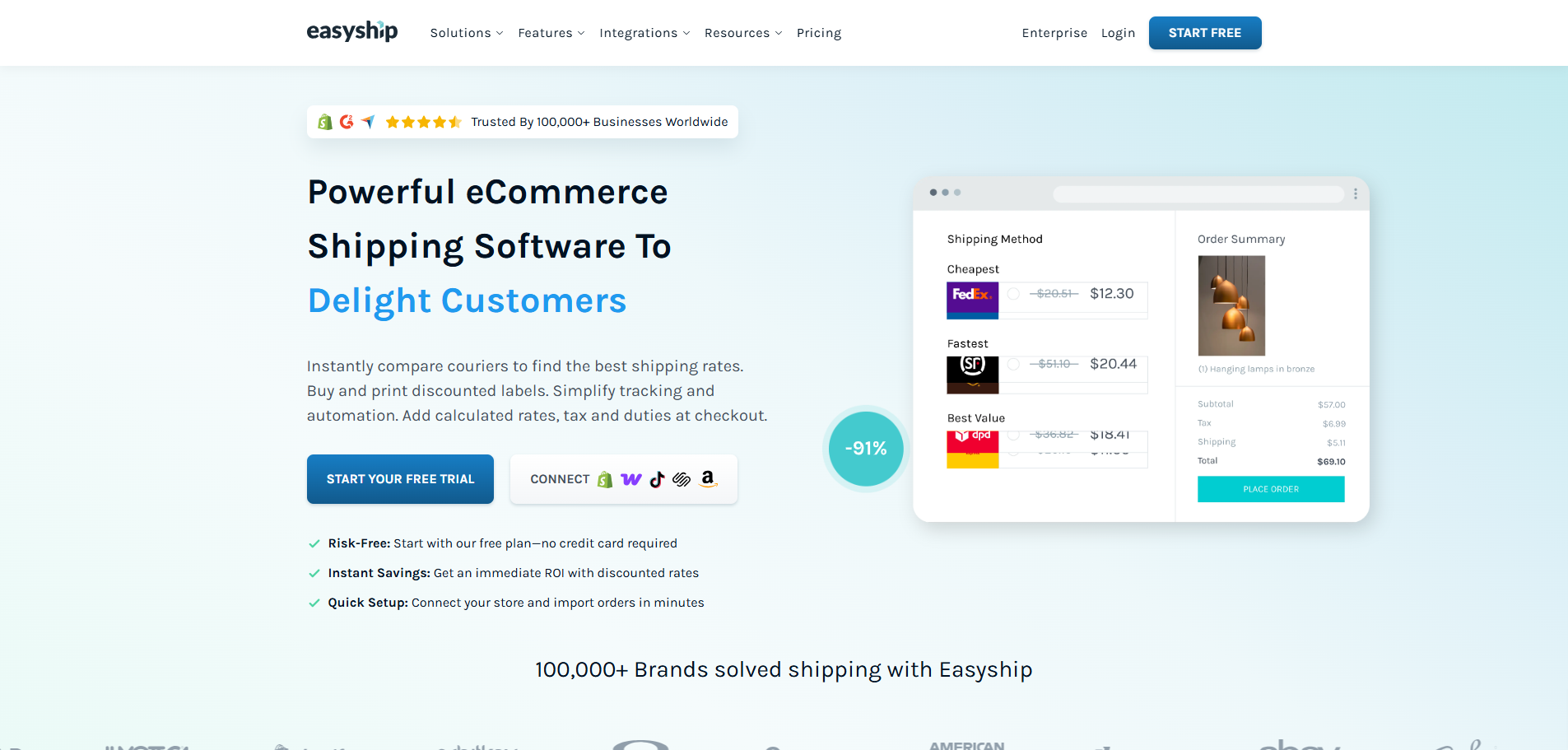
Good fit: Smaller campaigns where the creator packs at home or in a studio, but wants better rates and tracking.
Keep in mind: It's software first. Someone still has to put the stuff in boxes, so check which partner warehouse would actually do that.
12. Amplifier
Amplifier is a production and fulfillment company for merch-style rewards. T-shirts, hats, prints, posters, mugs, stickers. It can print on demand, which means you don't need to guess sizes upfront. It has worked with Indiegogo campaigns and its app is listed as BackerKit-compatible.
Good fit: Creators whose rewards are mostly printed merch, like artists, podcasters and film projects.
Keep in mind: If you're manufacturing a gadget or a game, Amplifier probably isn't your main warehouse.
13. eFulfillment Service
eFulfillment Service is a US 3PL that can receive shipments straight from manufacturers. It inspects items for quality, then handles packing, kitting, labeling, pre-orders and international shipping.
Good fit: Creators who want a quality check on arrival and plan to keep taking pre-orders after the campaign.
Keep in mind: Ask how many crowdfunding projects they've run, and what peak volume looks like for them.
14. InterFulfillment
InterFulfillment shows up near the top of crowdfunding fulfillment directories. It offers flexible services, custom packaging and kitting.
Good fit: Campaigns that need special packaging or a nice unboxing moment.
Keep in mind: It's more of a generalist. Ask about crowdfunding experience in your product category.
15. Zatu Fulfillment
Zatu is linked to a large UK board game retailer, and it fulfils Kickstarter and Gamefound campaigns. It ships EU orders through freight forwarding partners instead of its own EU warehouse, and offers a route into retail as well.
Good fit: Board game publishers with lots of UK backers who also want retail distribution later.
Keep in mind: Ask how EU parcels actually travel and who handles VAT on them.
Ship from China or Ship from a US or EU Warehouse?
This is the big decision, and honestly people overthink it a little. It mostly comes down to two things: where your rewards are made, and where your backers are.
Direct from China: when it makes sense
- Your rewards are made in China anyway.
- Backers are spread across many countries, with no single region dominating.
- You'd rather not pay for bulk freight, import paperwork and a second warehouse.
- You want to fix packing problems before anything leaves the country.
The trade-off is transit time. Parcels take longer than a domestic US shipment. For most backers who've already waited months, a week or two of tracked shipping isn't a dealbreaker. But do tell them upfront. We wrote more on this in our guide to crowdfunding fulfillment in China.
Bulk freight plus local 3PL: when it makes sense
- Most backers are in one country or one region.
- Your rewards are heavy, and local delivery would save a lot per parcel.
- You plan to keep selling locally after the campaign.
The catch: you pay for ocean or air freight, customs clearance and import duties on the whole shipment first. And you need the warehouse to be ready when the container arrives.
A split model for global campaigns
Bigger campaigns often mix both. Say, freight a pallet to a US warehouse for American backers, and ship everyone else direct from China. It's more planning, sure, but it can balance speed and cost pretty well.
What Drives Your Fulfillment Cost per Backer
Creators always ask, "how much per backer?" The honest answer is that it depends. The common mistake is only counting postage. Here's what usually goes into the bill.
|
Cost item
|
What it covers
|
What changes it
|
|---|---|---|
|
Receiving
|
Unloading and counting your stock
|
Number of cartons and SKUs
|
|
Storage
|
Space your rewards take up
|
Volume, and how long stock sits
|
|
Pick and pack
|
Building each order
|
Items per order, tier complexity
|
|
Packaging
|
Boxes, mailers, protection
|
Product size, custom packaging
|
|
Kitting
|
Bundling items before orders go out
|
How many items per kit
|
|
Shipping
|
Carrier cost to the backer
|
Weight, size, destination, service
|
|
Duties and VAT
|
Taxes on imports
|
Destination rules, declared value
|
|
Extras
|
Barcodes, insurance, inserts
|
What you choose to add
|
One tip that saves a lot of pain: get your quotes before the campaign launches, not after. Then build shipping into your reward prices. It's way easier than asking backers for more money later.
DDP vs DDU for international backers
These two terms decide who pays import taxes.
- DDP (Delivered Duty Paid): duties are paid upfront and built into the shipping cost. The backer pays nothing at the door. Services usually come with conditions. For example, SendFromChina's DDP option requires a declared value of no more than $150 and doesn't deliver to Alaska, Puerto Rico, Hawaii or Guam.
- DDU (Delivered Duty Unpaid): the backer pays any import VAT or duties on arrival. Cheaper for you, but some backers get annoyed by a surprise bill. Tell them early.
EU VAT and IOSS in plain words
For EU backers, VAT applies to imported goods, even low-value ones. The EU's VAT One Stop Shop portal explains the Import One-Stop Shop (IOSS). In short, IOSS lets sellers collect VAT at the point of sale for consignments up to €150, so backers don't pay again at delivery. Ask your fulfillment partner whether they support IOSS. This isn't tax advice, by the way. Check the details with a tax professional.
Red Flags When You Talk to a Fulfillment Company
Most providers are fine. A few aren't. Watch for these:
- No written quote. If they won't put fees on paper, walk away.
- Vague answers on storage. What happens if your factory runs two months late? You want that number before it happens.
- Big promises. Nobody can promise every parcel arrives on a certain day, or that customs will always clear. Anyone who does is overselling.
- No crowdfunding references. Ask for a creator you can actually email.
- Fuzzy address-change process. Backers move. Ask how late you can still update addresses.
- No clear plan for damage and loss. Who files the claim? Who pays to reship?
A Simple Fulfillment Timeline
Work backwards from the day you want backers to receive their rewards. Here's a rough plan most creators can live with.
|
When
|
What to do
|
|---|---|
|
Before launch
|
Get two or three quotes. Price shipping into your tiers.
|
|
During the campaign
|
Pick your provider. Confirm packaging and tier layout.
|
|
Right after funding
|
Send out your pledge manager survey. Lock add-ons.
|
|
During production
|
Share product weights and sizes. Book freight or warehouse inbound.
|
|
Goods arrive
|
Receiving, QC, then a test pack of each tier.
|
|
Ship week
|
Address lock, orders released, tracking sent to backers.
|
|
After shipping
|
Handle lost, damaged and returned parcels.
|
The fulfillment window itself is usually the short part. Production delays are what really move your date, so build in a buffer and keep backers updated. Kickstarter's own creator handbook on fulfillment is a good read before you start.
Conclusion
There isn't one best crowdfunding fulfillment company for everyone. It depends on where your rewards are made, where your backers are, and how complicated your tiers get.
If your product is made in the US and backers are mostly American, a US specialist like Fulfillrite or Red Stag is a natural start. Tabletop projects with lots of UK and EU backers might look at GamesQuest or Zatu. And if your rewards come off a production line in China and your backers are all over the map, shipping direct from China with a provider like SendFromChina, NextSmartShip or Floship is worth pricing out.
Whatever you pick, get quotes early, ask the awkward questions, and do a test pack before the big wave goes out. Want to see what China-direct fulfillment would cost for your campaign? You can request a quote here. And for a ranked take on this topic, see our top crowdfunding fulfillment companies of 2026.
FAQs
What is crowdfunding fulfillment?
It's the process of storing, packing and shipping rewards to backers after a campaign ends. It usually covers receiving stock, kitting by tier, shipping, tracking and handling problems like lost parcels.
How much does Kickstarter fulfillment cost per backer?
It depends on weight, size, destination, packaging and how complex each pledge is. Shipping is usually the biggest piece. Get quotes from a few providers using your real product dimensions before you set reward prices.
When should I start looking for a fulfillment company?
Before launch, ideally. You need real shipping estimates to price your tiers. Pick a provider during the campaign or right after it ends.
Do I need a pledge manager as well as a fulfillment company?
Usually yes. The pledge manager collects addresses, add-ons and extra payments. The fulfillment company packs and ships. They're two different jobs that need to talk to each other.
Can a 3PL handle a one-time campaign with no monthly minimum?
Some can, some can't. Crowdfunding specialists are more used to one-off projects. Ask about monthly minimums and setup fees directly.
Should I ship rewards directly from China?
If your product is made in China and backers are spread across many countries, it's often worth considering. You skip bulk import and a second warehouse. If most backers are in one country, compare it with freighting stock to a local 3PL.
How do I handle VAT and duties for EU and UK backers?
Decide whether you'll ship DDP, where duties are prepaid, or DDU, where backers pay on delivery. For the EU, ask whether your provider supports IOSS. The UK has its own rules for low-value imports, so check those separately.
How long does fulfillment take after the campaign ends?
Packing and shipping often take a few weeks once stock is in the warehouse. Production and freight usually take much longer. Plan around your factory's date, not just the warehouse's.
Should I self-fulfill or use a fulfillment company?
Self-fulfilling can work for a few hundred simple rewards. Past that, the time, packing materials and shipping rates usually make a 3PL the saner choice.
What should I ask a fulfillment provider before signing?
Ask for a full written quote, crowdfunding references, storage terms if you're delayed, address-change cutoffs, and how they deal with lost or damaged parcels.
 Want to know about our services, fees or receive a custom quote?